
End of Year Review 2025
Cambridge Homelessness Charter
It Takes A City (Cambridge) (ITAC) hosts the Charter project office, providing a strong strategic base. The Charter has significantly raised ITAC’s profile through social media and networking. Historically founded as a convening organisation to end homelessness, ITAC shifted towards emergency provision during the COVID-19 pandemic. The Charter represents a return to ITAC’s original mission: addressing homelessness through collaboration and systemic change.
As we approach the close of 2025, it is fitting to begin this review with gratitude for the financial support from NPT Transatlantic and CCF Warwick & Dominey who have helped to fund the project office throughout 2025. Furthermore, our heartfelt acknowledgement goes to the Cambridge Building Society, whose generous donation of £20,000 to the Charter will enable the continued work of the Collaboration Group and the six Pillar Working Groups well into 2026. This remarkable contribution represents an inspiring vote of confidence in the Charter and a truly wonderful Christmas gift.
Overall, 2025 has been an inspiring and productive year, marked by growth, collaboration, and tangible impact. What follows is a summary of the key activities, outcomes, and learning from the year, alongside a look ahead to the next stage of our journey.
Activities in 2025
Throughout the year, the Charter focused on building strong foundations for long-term systemic change. Key activities included:
- Convening and expanding the Collaboration Group, and building consensus around the Charter’s wording, values, and aims.
- Launching the Cambridge Homelessness Charter website to promote awareness and engagement.
- Developing a Theory of Change structured around six Pillars of Change.
- Establishing six Pillar Working Groups, each with defined aims and emerging leadership.

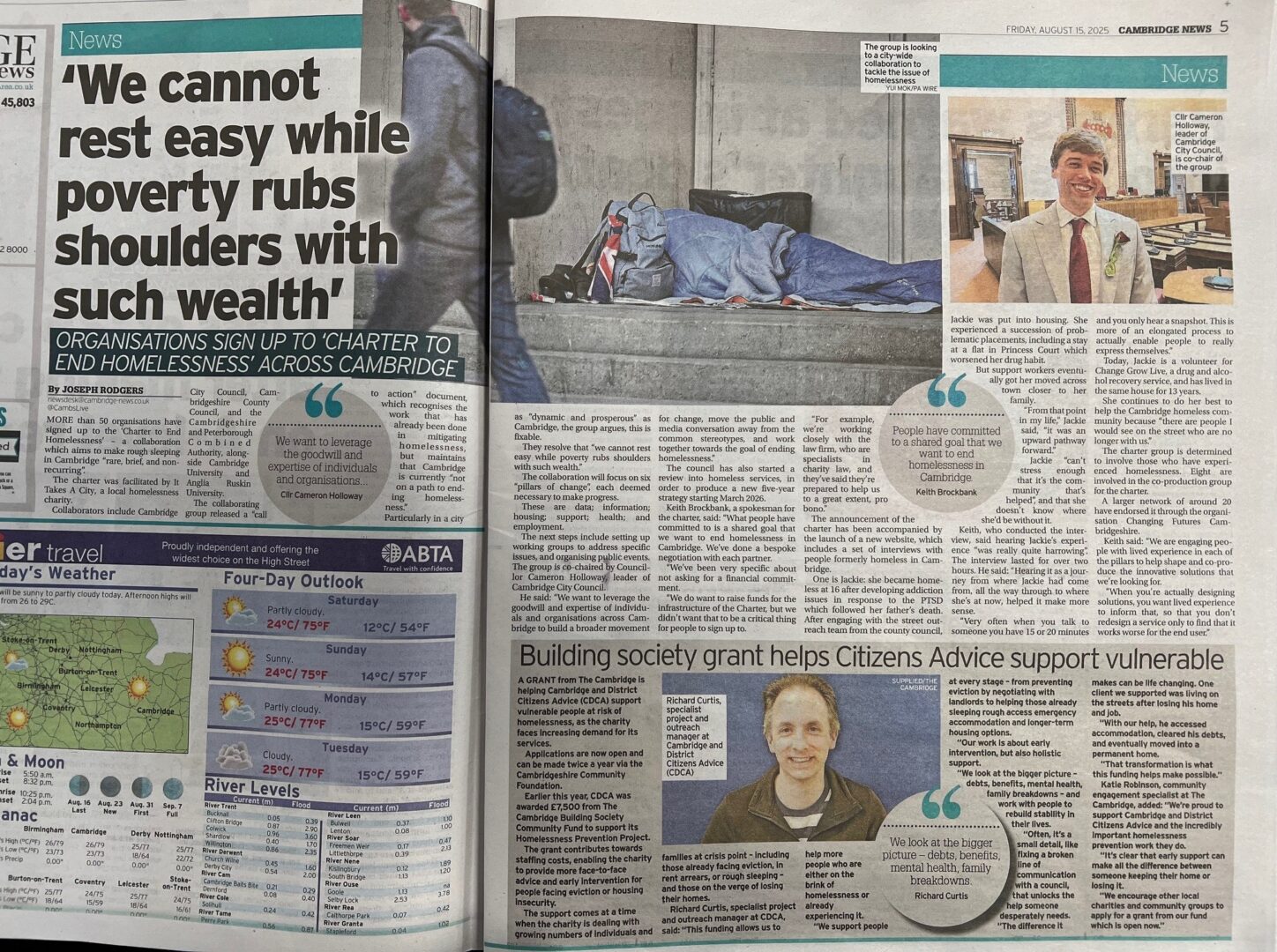
The Charter’s work was actively promoted through social media, press releases, thought leadership articles, and radio interviews, helping to raise awareness of homelessness issues and the Charter’s growing influence across Cambridge.
In addition, the Programme Manager provided direct support to several individuals with lived experience of homelessness, including accompaniment to appointments with agencies such as the Department for Work and Pensions (DWP). These interventions led to positive and meaningful outcomes for those involved.
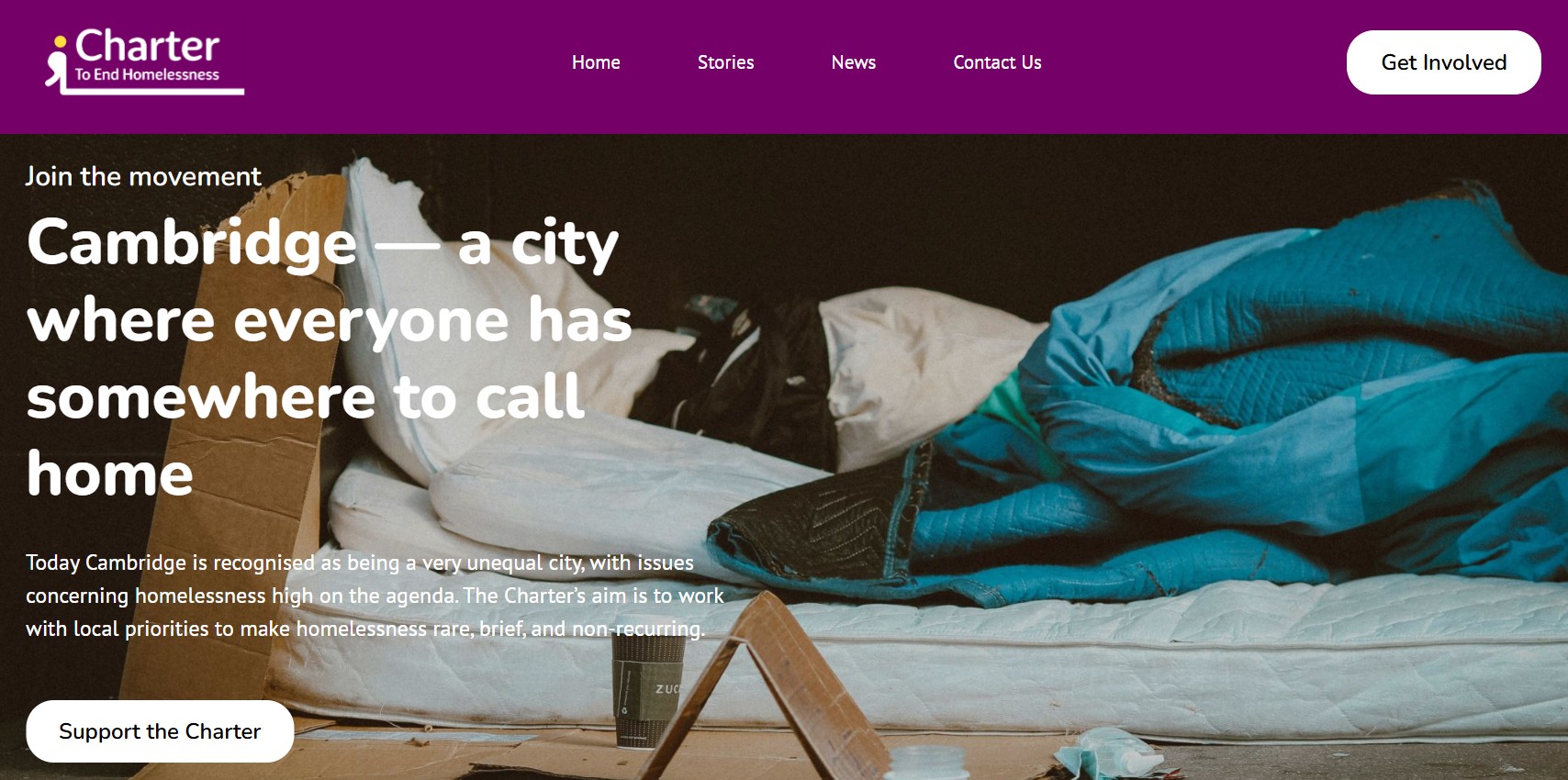
Pictured: Charter website homepage
The Charter website, launched in July 2025, has attracted over 100 unique visitors, with more than 40 individuals formally joining the Charter through the online interest form.
Six working groups were initiated in line with the Charter’s Six Pillars of Change: Data, Information, Housing, Support, Health, and Employment. These groups are now meeting regularly and focusing on improving access to information, housing pathways, tailored support, healthcare, and employment opportunities for people who have experienced or are exiting homelessness.
Impact
As a direct result of the Charter’s activities in 2025, ten individuals have been supported on their journeys out of homelessness, benefiting from advocacy, systemic engagement, and improved coordination between services. The Charter has successfully convened stakeholders representing over 150 members and 90 organisations, including:
- Local Authorities
- Voluntary and charitable sector organisations
- Universities & Colleges
- NHS organisations
- Local businesses
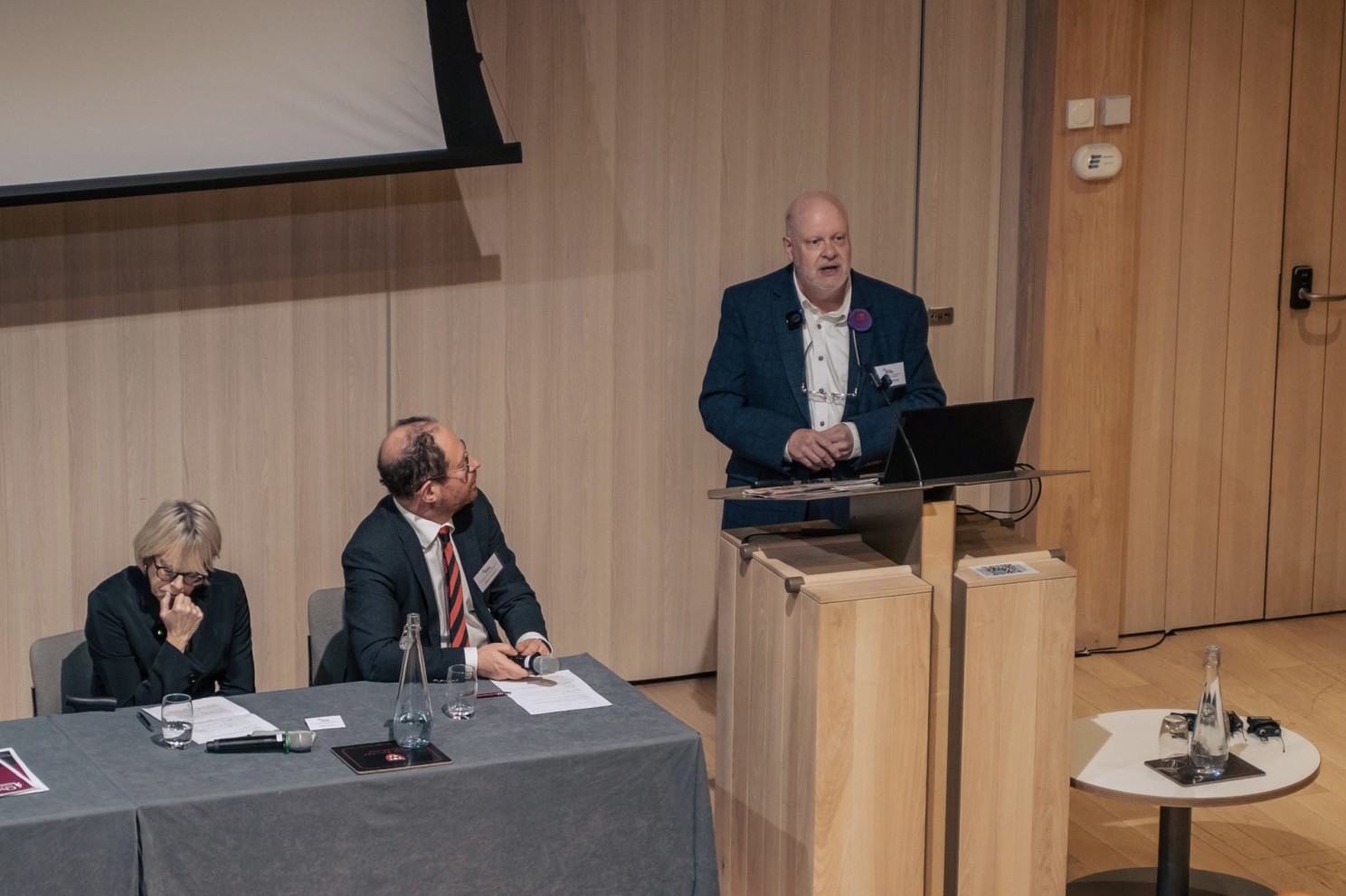
Pictured: Keith Brockbank (Programme Manager) presents at Better Futures Programme in Cambridge
This breadth of engagement has enabled a shared, collaborative approach to ending homelessness in Cambridge. It has also created opportunities for organisations to review and adapt their systems and processes, embedding good practice and improving outcomes.
The launch of the Charter website, supported by media and social media coverage, has brought a further 30+ individuals into active involvement. This has strengthened community awareness, challenged stereotypes around homelessness, and increased collaboration across sectors and communities in Cambridge.
The Six Pillars of Change
The Charter’s work is grounded in its Six Pillars of Change: Data, Information, Housing, Support, Health, and Employment.
During 2025:
- Introductory meetings were held for the Information Pillar Working Group, led by Elliot Harris
- The Support Pillar Working Group, led by Keith Smith, was formally established
- Simon Hunt of Cambridge City Council agreed to lead the Housing Working Group
- The Employment Pillar Working Group, led by Fiona McGonigle (ARU) progressed work on a local pilot in Partnership with Crisis Homelessness Alliance. Local employers have been engaged in the pilot.
- The Health Pillar Working Group, led by Prof Lee Smith (ARU), has had introductory meetings and is investigating innovative healthcare solutions to help people experiencing homelessness
- The Data Pillar Working Group, led by Johannes Lenhard (CHIRN) held several meetings including researchers and data analysts, working towards improved use of existing data as well as gathering further data with respect to homelessness
These working groups have already proved pivotal in identifying barriers and co-developing innovative, practical solutions that support people’s journeys out of homelessness. Additional information about each Pillar Working Group can be found at the end of this report.
Community and Organisational Commitment
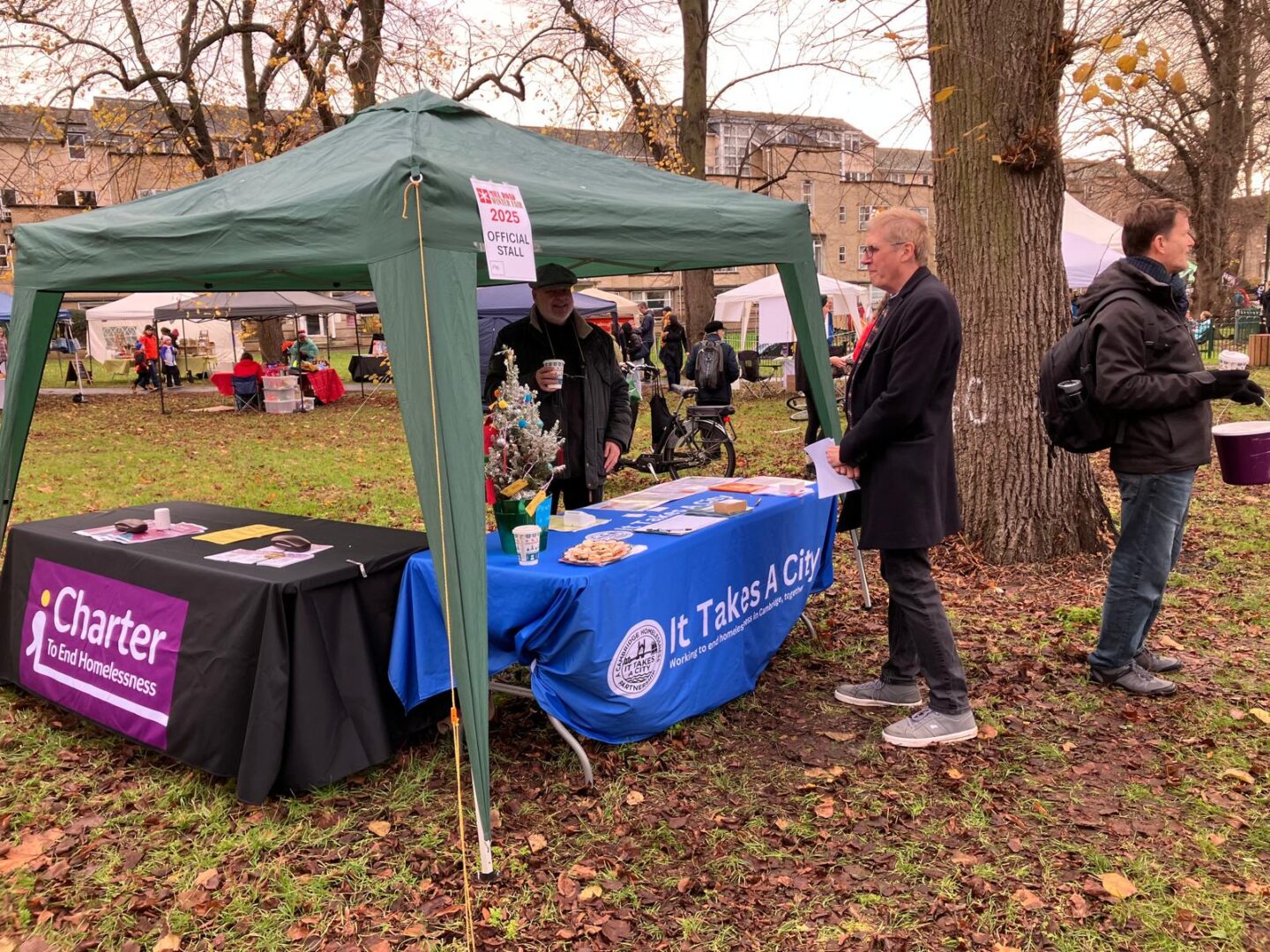
Pictured: Keith Brockbank (Programme Manager) representing the Charter at the Mill Road Winter Fair
Members of the wider Cambridge community, including Bidwells, Cambscuisine, Cambridge Building Society, and Cambridge Dining Company, have made formal commitments to the Charter, including making financial contributions.
Voices from the Community
“While there is already a lot of excellent work being done within Cambridge to prevent and tackle homelessness, no one organisation can achieve an end to homelessness on its own. There are many and varied reasons why people become and remain homeless, and working towards this ambitious goal requires a whole-society approach, with the voices of people who have experienced homelessness at the centre.
While publicising and celebrating what is already being done, we want to leverage the good will and expertise of individuals and organisations across Cambridge to build a broader movement for change, move the public and media conversation away from the common stereotypes, and work together towards the goal of ending homelessness.”
— Cllr Cameron Holloway, Leader of Cambridge City Council
“My involvement with the Charter, and especially with the Employment Pillar, has enabled me to have a voice with service providers which is different to anything I have had before. This is not only improving my interactions with agencies, but also allowing me to have an influence which will benefit many others experiencing homelessness, both now and in the future.”
— Gary Diggin, volunteer with lived experience
Case Study: Employment Pillar and the DWP
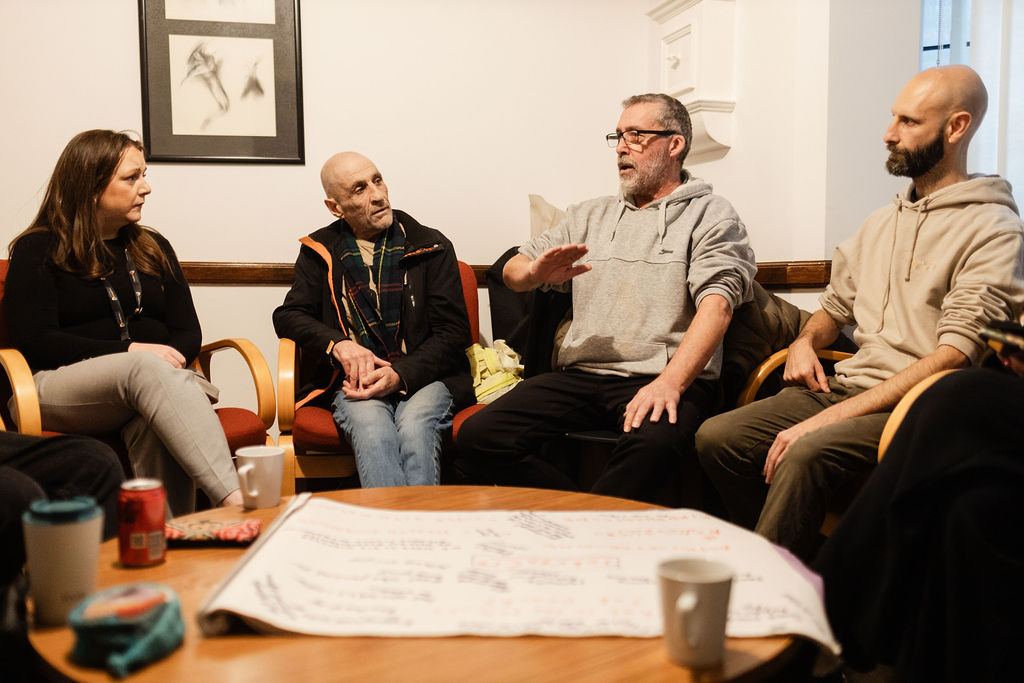
Pictured: A group with lived experience of homelessness in Cambridge meet with members from the DWP
Through the development of the Employment Pillar Working Group, people with lived experience raised concerns during a meeting led by the Programme Manager in early December with the Regional Director of the DWP.
One individual, referred to here as G, had left street homelessness several years ago but continued to face challenges related to recognition of his voluntary co-production work and his deteriorating health. Through his involvement with the Charter, G attended two Job Centre appointments accompanied by a trusted advocate provided via the Employment Pillar.
As a result:
- G’s co-production work (and that of others) is now recognised by the DWP as preparation for work.
- The DWP acknowledged the importance of co-production in improving employability outcomes for people exiting homelessness.
G’s case highlighted the need for systemic change within the DWP, prompting constructive dialogue between the Charter and the Regional Director. The DWP has recognised that these issues reflect the wider reality for many people exiting homelessness. Resolution of these concerns significantly reduced G’s anxiety and has enabled him to explore new opportunities for training and employment.
This case study demonstrates the value of the Charter’s engagement with statutory agencies and its potential to influence systemic change.
Looking Ahead
Momentum has continued to build towards the end of 2025, with all six Pillar Working Groups now emerging as innovation hubs under strong leadership from within the Collaboration Group.
The next phase of work will focus on:
- Fully developing the Pillar Working Groups.
- Advancing co-produced, innovative solutions to persistent challenges faced by both
organisations and individuals experiencing homelessness.The Programme Manager has secured meetings with senior local officials, including the Regional Director of the DWP, to continue open discussions about systemic and cultural change. The challenge ahead is to translate these discussions into sustained action.
The Charter’s work is also closely aligned with the new Homelessness Strategy (2026–31) being developed by Cambridge City Council.
In addition, a communications group has been convened with the generous support of Conscious Communications. This group will continue to raise awareness through presentations, media engagement, and social media, and is beginning to plan a public event to showcase the Charter’s work.
Conclusion
The growing groundswell of public support and collaborative engagement is deeply encouraging. However, the challenge remains to ensure that this momentum results in meaningful, lasting changes that significantly improve the lives of people who are vulnerably housed or experiencing homelessness.